 ( 785081 )L'effacement progressif des traces sur le Saint Suaire de Turin par Presbu (2015-08-13 17:39:03)

source: un long article de Charles FREEMAN sur le site
L'auteur insiste sur la netteté et même les détails qui apparaissaient selon les témoins - bien plus fortement qu'aujourd'hui. Il semblerait même que ces traces se seraient encore estompées depuis les premières photographies de Secondo Pia. ? Peut-être que le Seigneur veut nous priver d'une preuve trop éblouissante de Sa Résurrection, juste assez pour Lui faire confiance sur ce "commencement de preuve tangible", pas assez pour nous contraindre à la Foi si nous sommes récalcitrants! commentaires des liseurs SVP/
***
The change in iconography is dramatic. Scenes of Christ’s burial from the 12th and early 13th centuries show little or no blood, as in the enamel of the Lamentation from the Klosterneuberg Altar of 1181, where Christ is being laid out, his hands crossed over his pelvis but with few signs of any bloodshed. The (Hungarian) Pray Codex from 1192-95 is another. Once the Klosterneuberg enamel is compared with imagery of 130 years later, as seen in the Holkham Bible of c.1330 (from Holkham Hall in Norfolk), the contrast is obvious. In its crucifixion scene, blood spurts from the Crown of Thorns and more runs down Christ’s arms from the wounds in the hands. The moment shown is when his side has been pierced and he has died (John 19: 34-5)
This new emphasis on the blood of Christ is a development of the 14th century and it is important to see whether the Shroud reflects this iconography. If one compares the Holkham head of Christ, taken from another crucifixion scene in the Bible, with the head on the Shroud, it is almost as if they came from the same template. Again one can see how the blood flowing along the arms of the man on the Shroud echo those of the crucified Christ in the Holkham Bible. It is important to note that on the Shroud they are not continuous, rather small individual blotches, and they could not have come from blood flowing down the arms of a body lying down. Note, too, the blood dripping from the lance that, in the negative image of the Shroud, appears to be reproduced outside the body image on its left side. In short, here, too, the artist is copying an iconography similar to that of the Holkham Bible.
One is moving towards an attribution of the images on the Shroud to the 14th century, but what is perhaps the most fascinating evidence is still to come. In the account given by De Baetis he reported the scourge marks on the images. A more explicit description is given by the Clare nuns in the 1530s:
The bruises and the scourge blows on the stomach are so thick that a pinhead-large zone free from all blows can hardly be found. The scourge blows inter-crossed continuously and extended all the way along the body as far as the feet tips.
- See more at: http://www.historytoday.com/charles-freeman/origins-shroud-turin#sthash.rUvDz8u2.dpuf
 ( 785086 )On peut dire tout aussi bien, par Yves Daoudal (2015-08-13 19:06:43)
 ( 785089 )Et que dire par Jean Ferrand (2015-08-13 19:26:45)
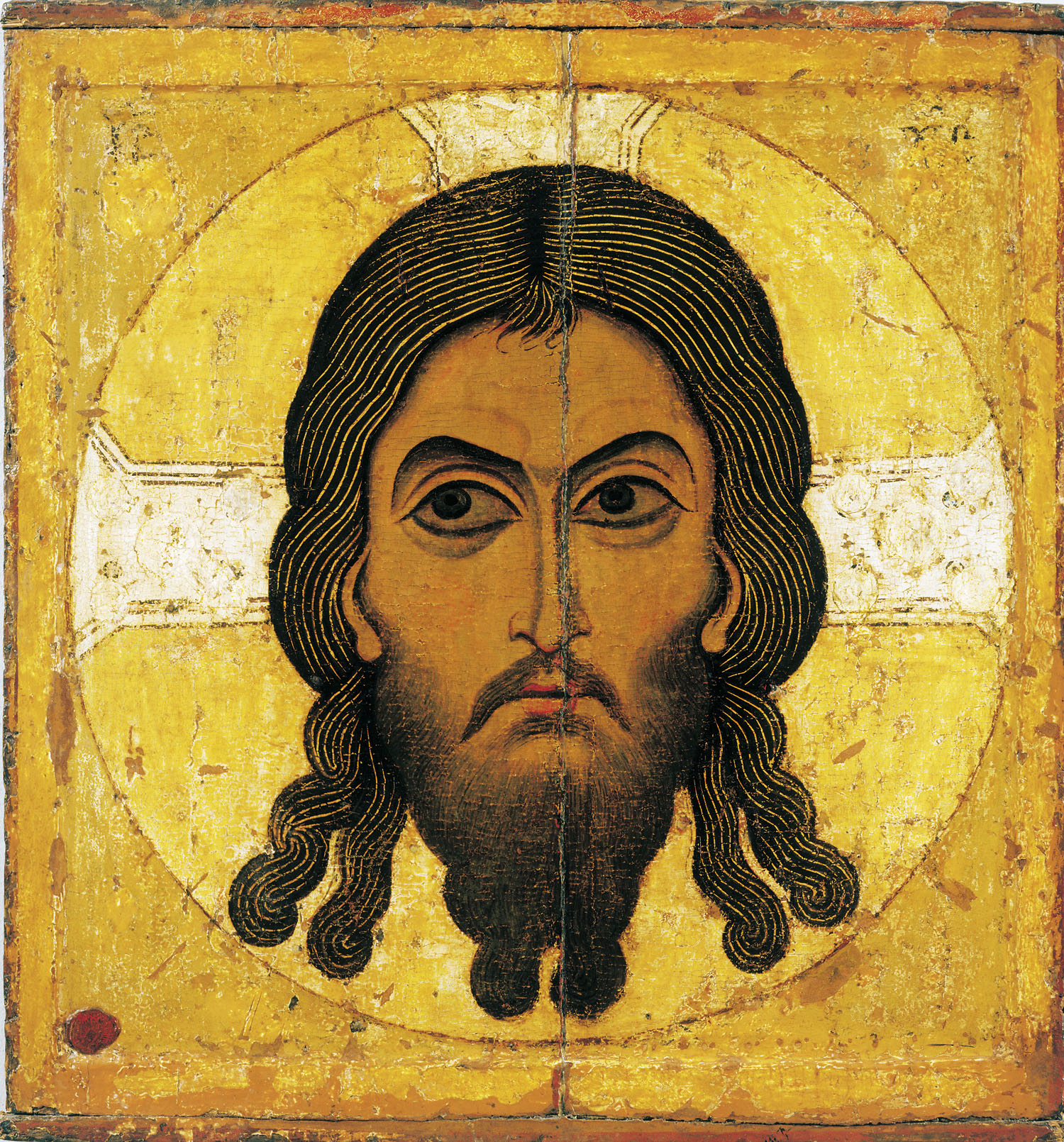 ICI
ICI  ( 785093 )J'en dis par Yves Daoudal (2015-08-13 20:11:03)